A black line representing the connection of one concept to another.
Soil 101

Have you ever wondered why most soils are lacking the nutrients or soil structure needed to support healthy plant development?

The truth is the nutrients that plants require are contained in dirt. The trick is turning dirt into soil requires life in the soil. 

Life requires food.

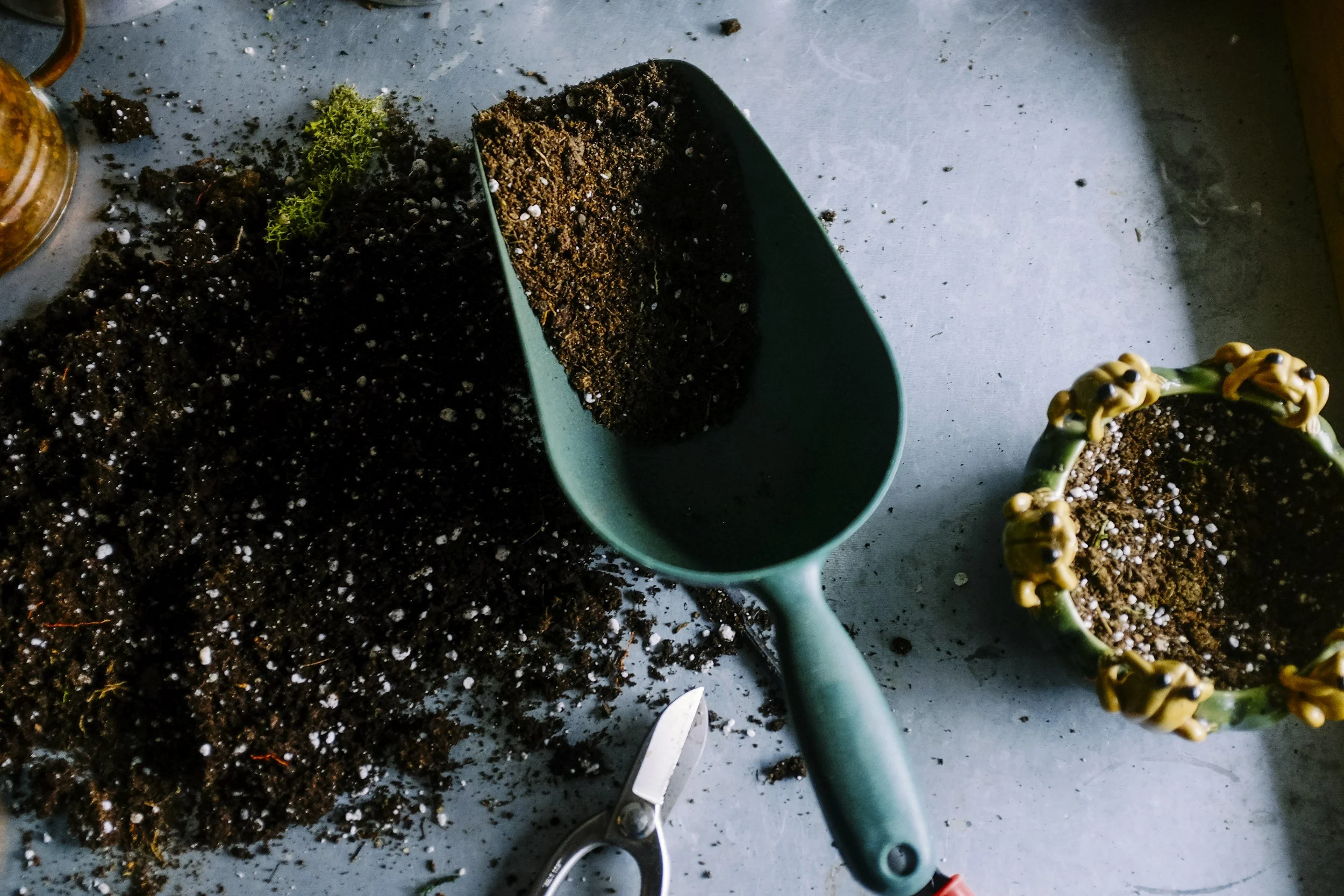
Plant gardening tools, including a green shovel, a pair of small scissors, and a wreath made of small yellow flowers with green stems, arranged on a gray surface. There is soil, a plant pot, and seedlings in the scene.
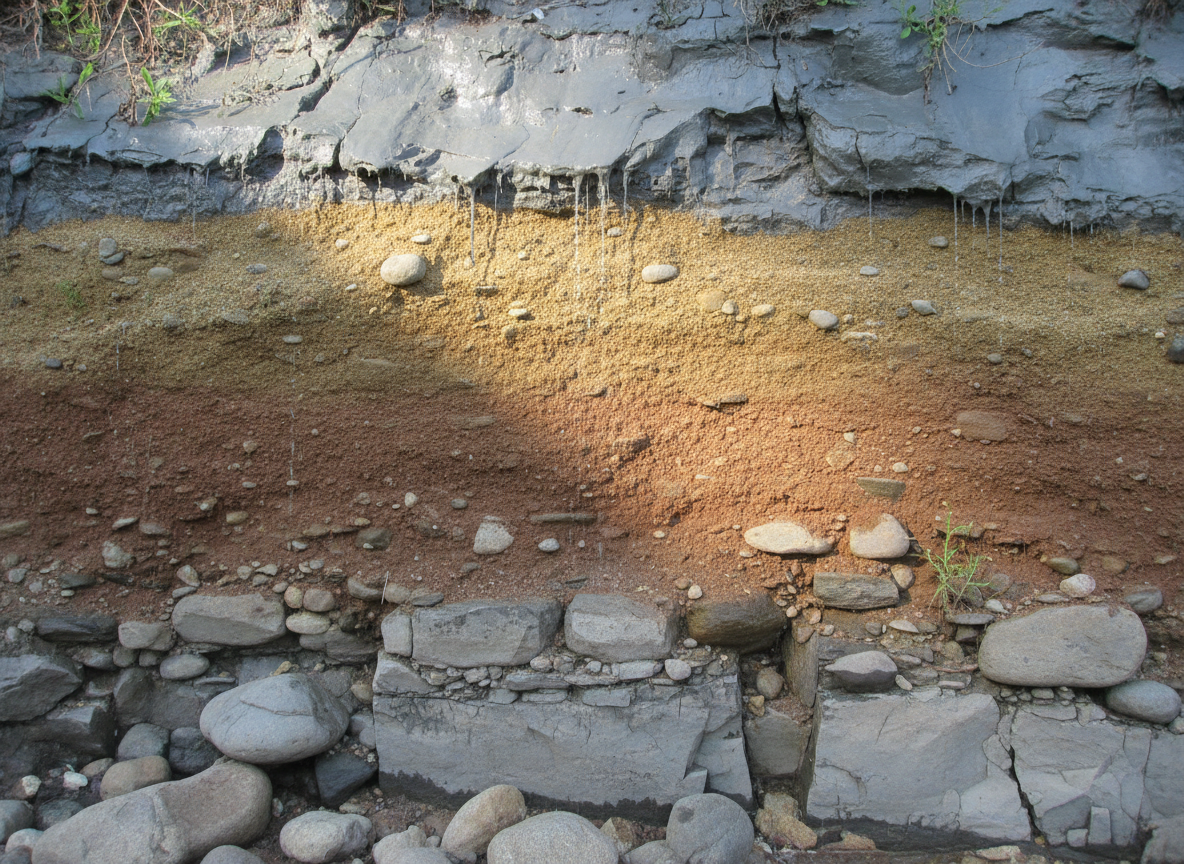
A cross-section of a rocky hillside showing different layers of soil and rock with various sized stones and plants growing around the edges.
Explanation of Soil Food Web

Bacteria break down minerals contained in rock, silk, sand, and clay through alkaline enzymes to consume the nutrition they need.

Step 01
A black line representing the connection of one concept to another.

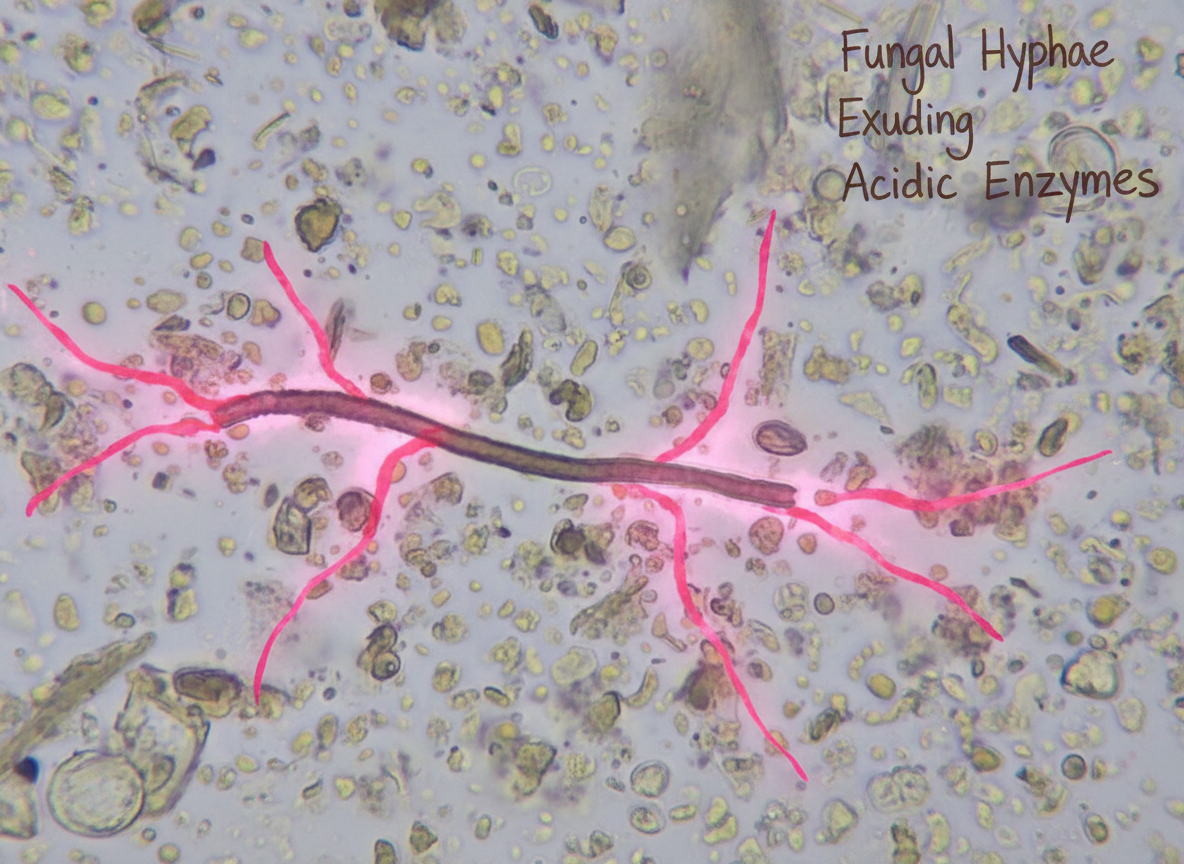
Meanwhile, fungi use acidic enzymes to break down organic matter.
Step 02
A black line representing the connection of one concept to another.
A microscopic view showing fungal hyphae exuding and acidic enzymes, with labels pointing to structures in the image.
Step 03

Enzymes are the same thing we use when we breathe on glasses before cleaning them. The enzymes in our mouth break down organic matter.

A woman with braided hair and multiple rings removing her glasses outdoors, with steam or vapor rising near her mouth.
Step 04

As they consume more than what their bodies need, they poop out the rest. Just like everything else in life.

That poop then becomes like a glue.
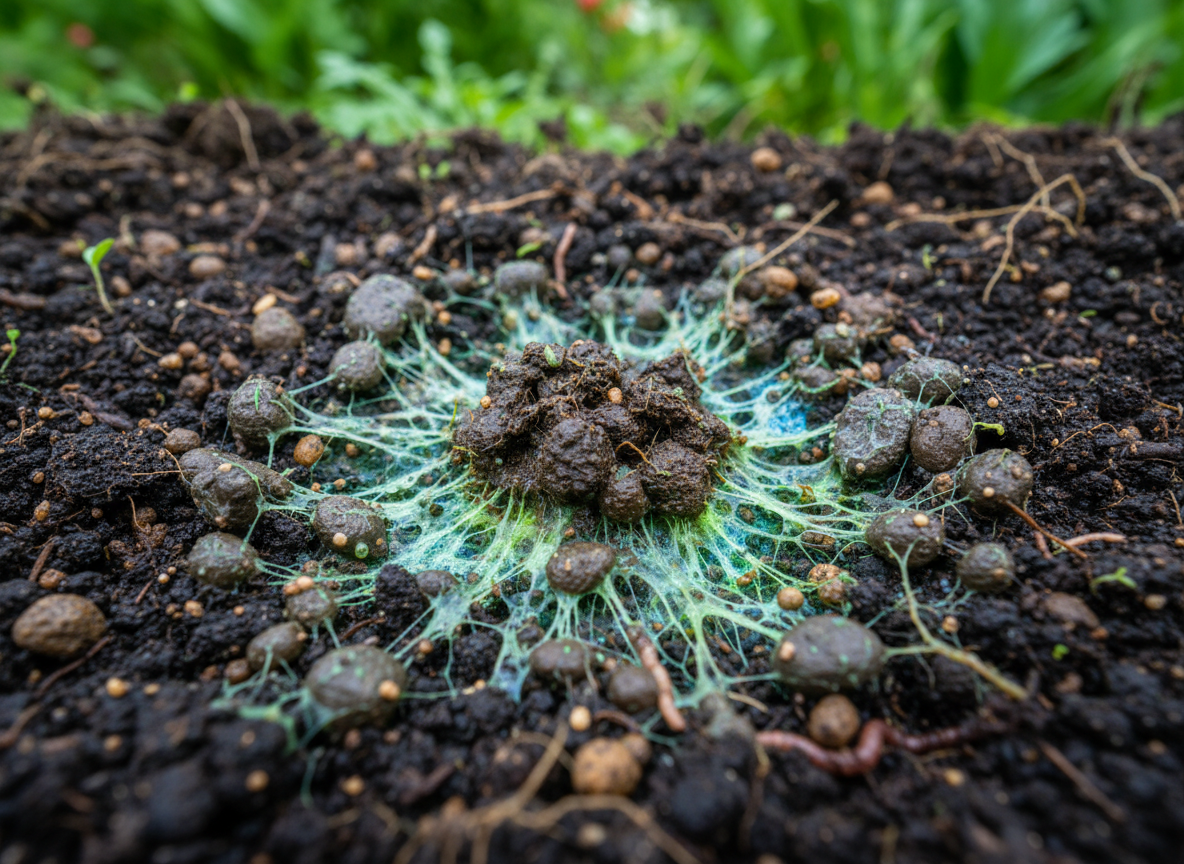
Close-up of soil with a bacteria spreading out in a flower-shaped pattern, surrounded by small stones and tiny plant sprouts.

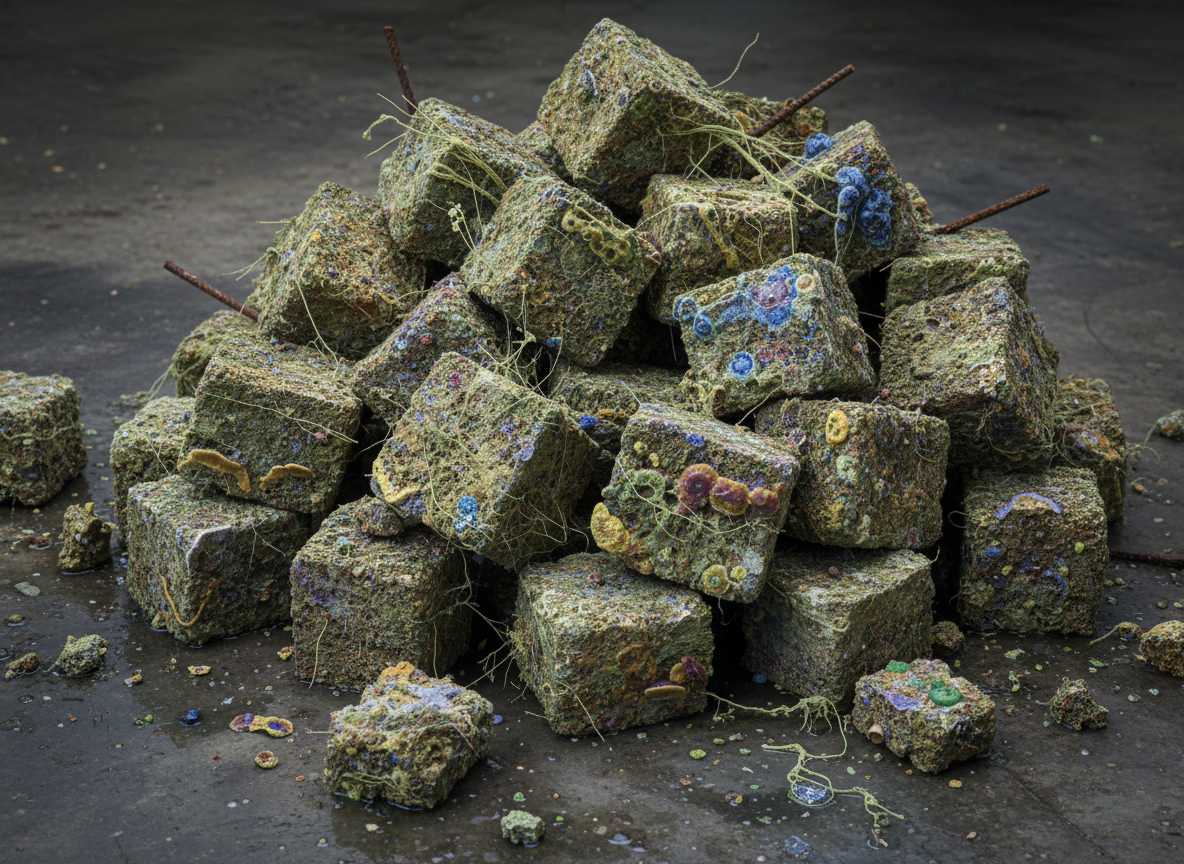
These glues become the foundation for soil aggregates.

Imagine bacteria create building bricks.
Step 05
A simple line drawing of a circle with an arrow pointing toward a point outside the circle, illustrating a concept related to angles or movement.
A pile of bateria-covered concrete blocks with colorful lichen and some rusty metal rods sticking out, scattered on a dark, weathered surface.
Step 06

And as the fungi moves through the soil, it connects those soil aggregates. These become the foundation for soil structure.

A miniature brick wall with plants growing over it, resembling a natural landscape.
A black line representing the connection of one concept to another.
Step 07

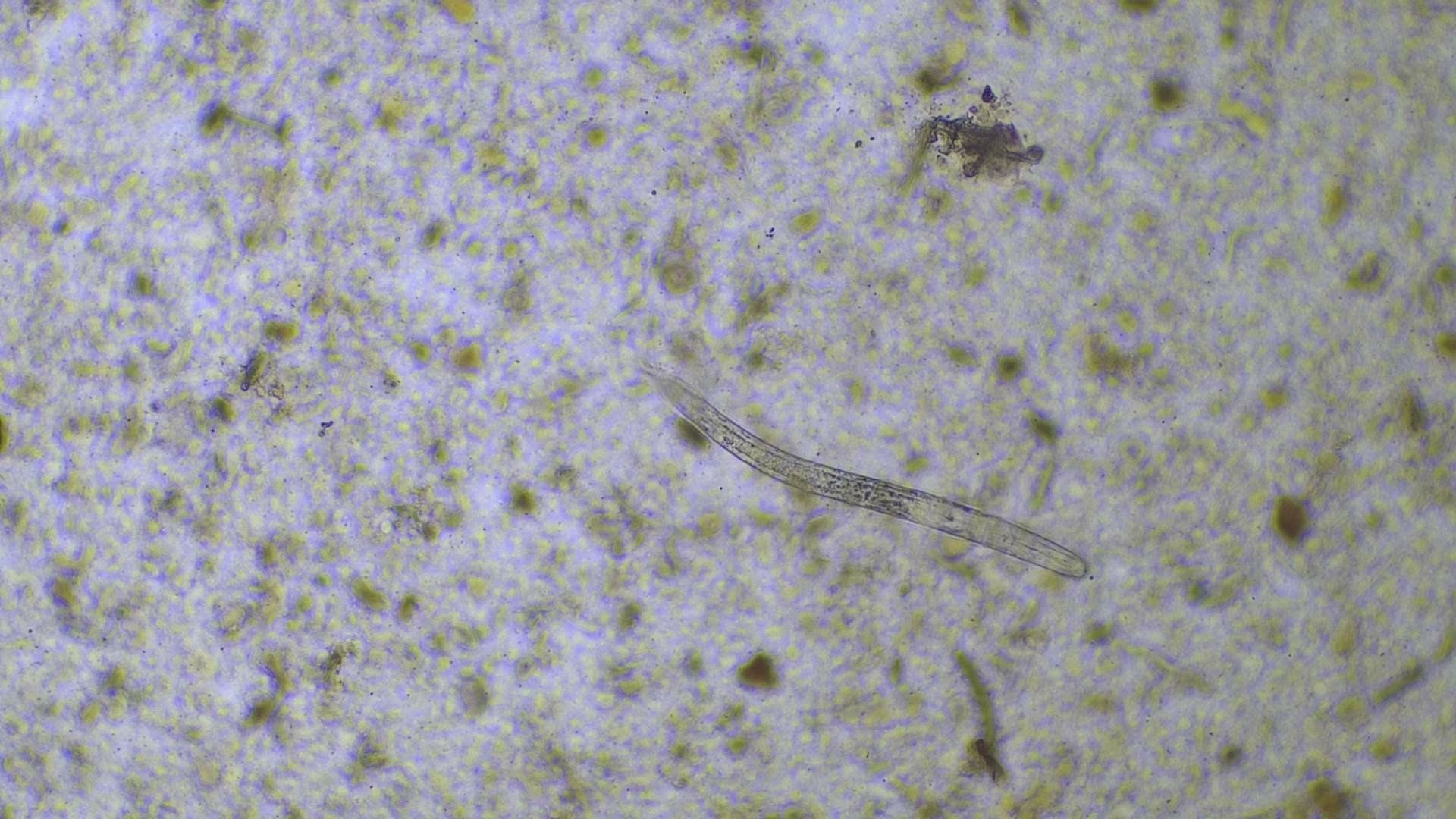
As populations of bacteria and fungi increase, higher-level organisms come along to feed on the bacteria and fungi for their nutrients.

Close-up of a microscopic organism or structure with a long, slender body, surrounded by small, yellowish particles and debris.
Step 08

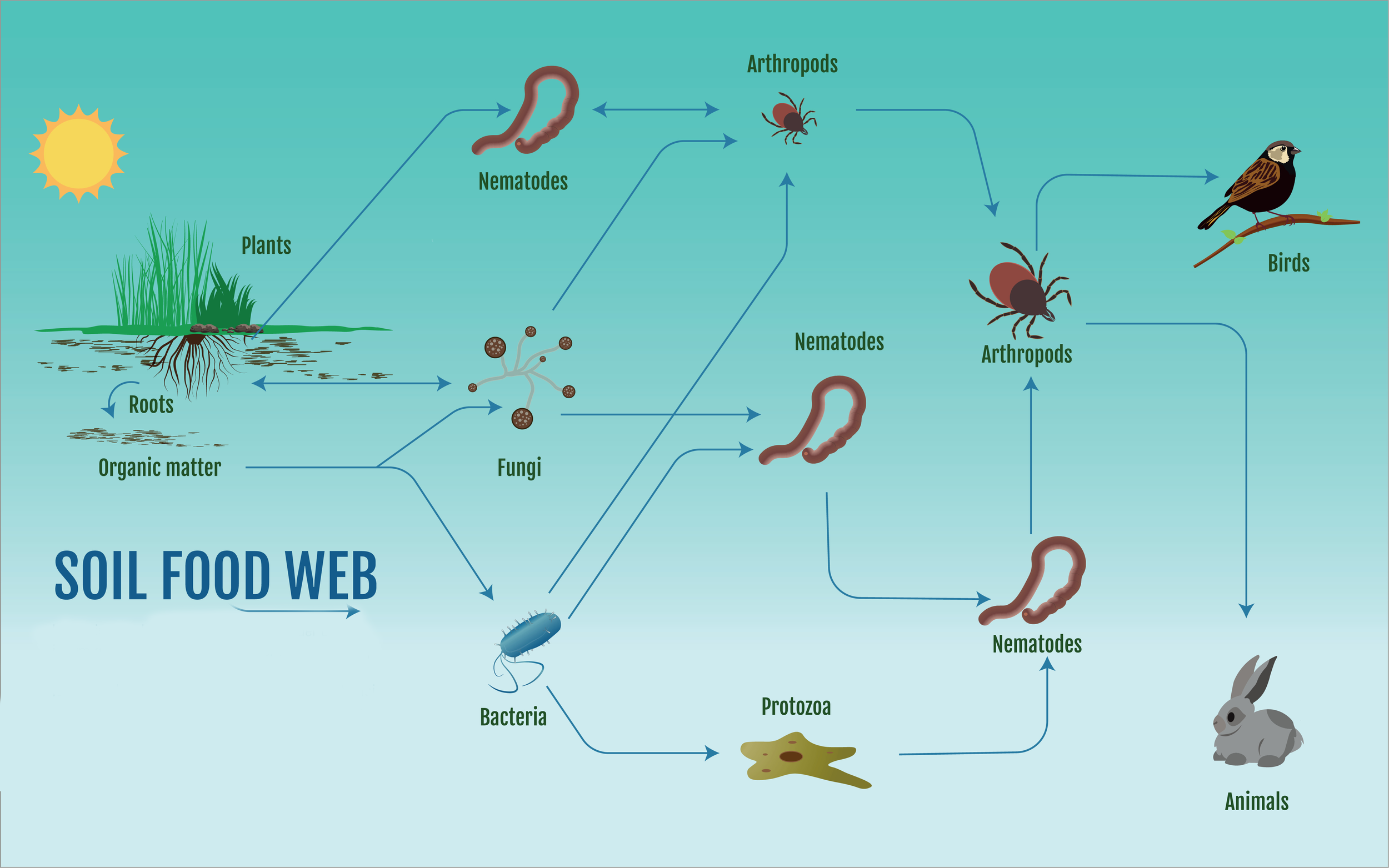
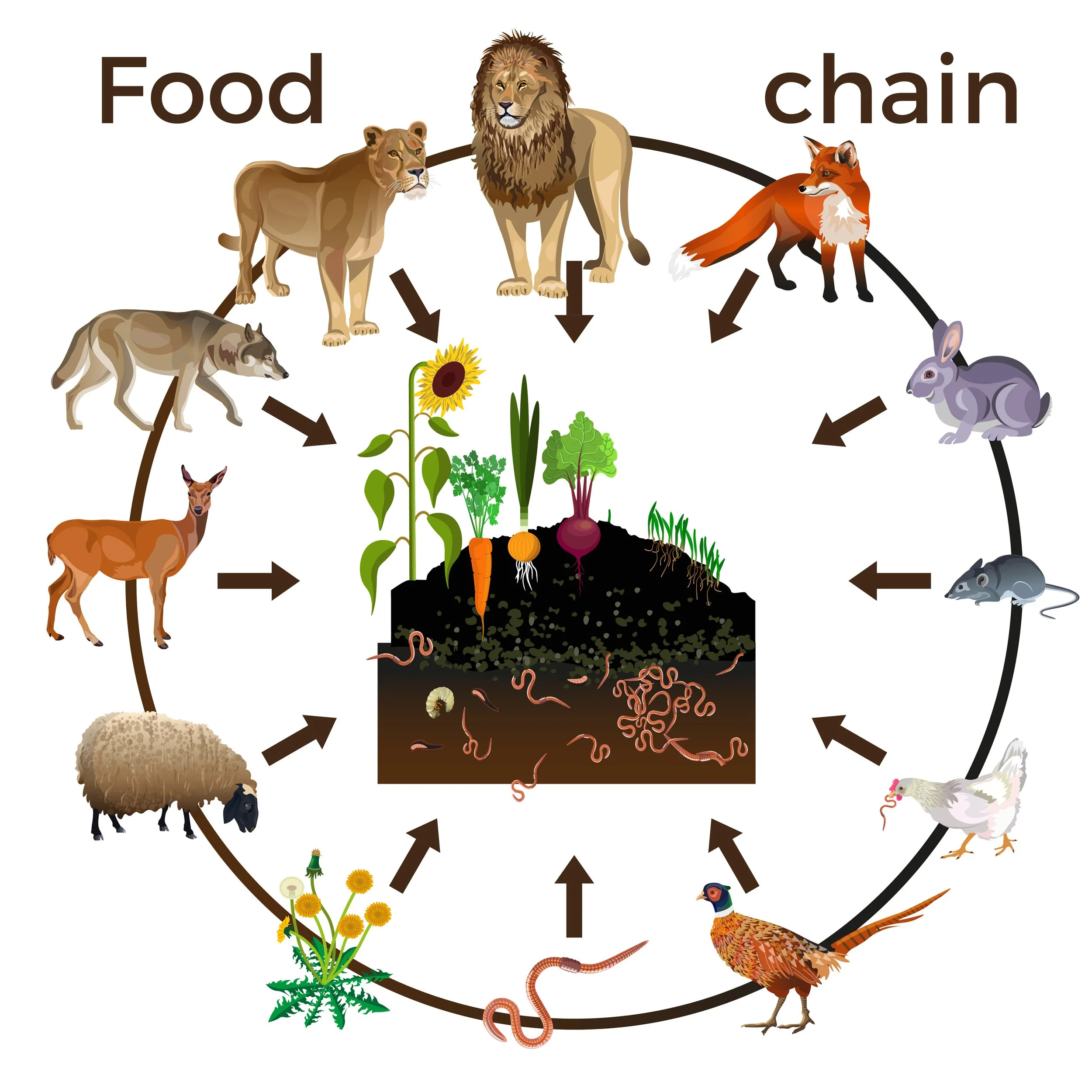
Much like what we know about the above ground predator-prey food web.
A black line representing the connection of one concept to another.
Diagram showing the food chain in an ecosystem with animals and plants, illustrating predator-prey relationships and the flow of nutrients.
Step 09

The higher-level organisms include protozoa, amoebae, nematodes, and some fungal-looking strands called actinobacteria.
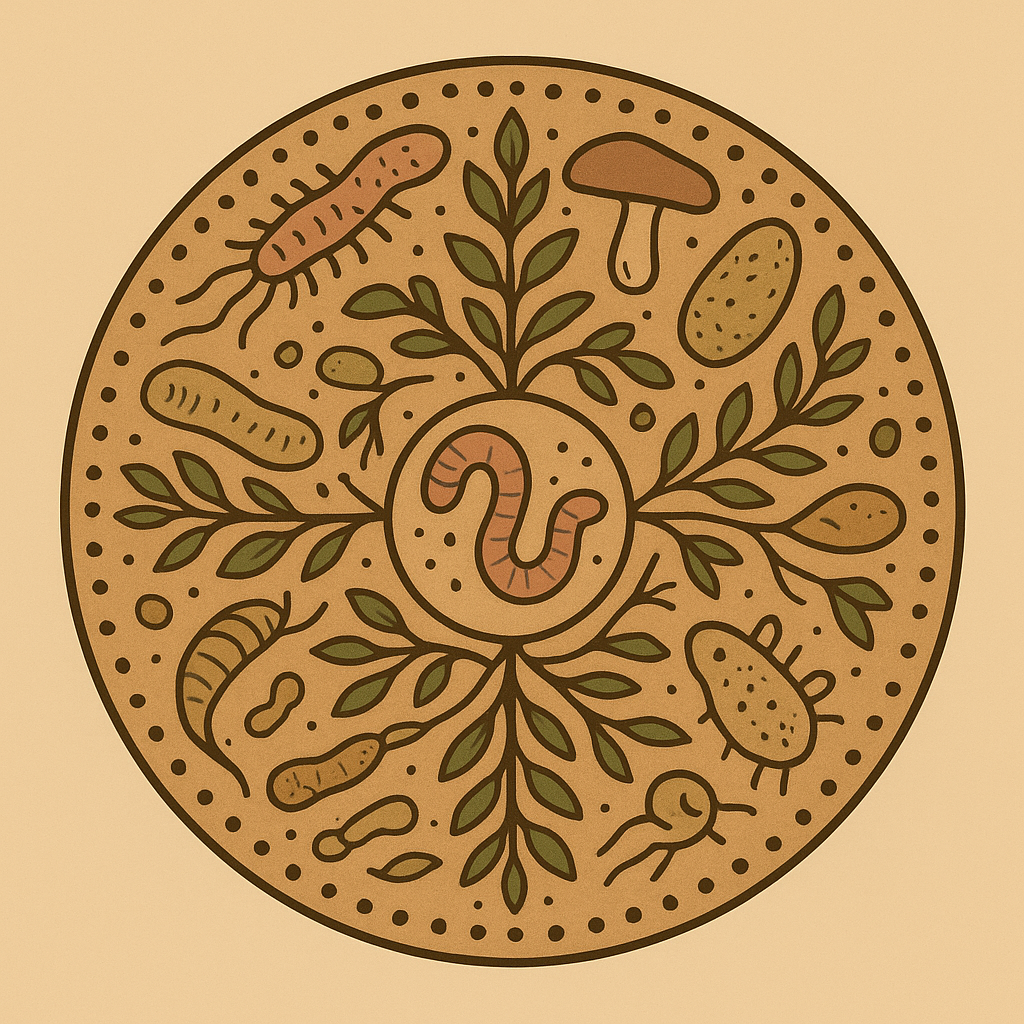
Illustration of various microscopic bacteria and microorganisms inside a circular frame, with leaf-like branches extending from a central worm.
Step 10

Within active and diverse soil food web, these organisms make minerals and nutrients available to plants and build soil structure able to retain moisture and oxygen.
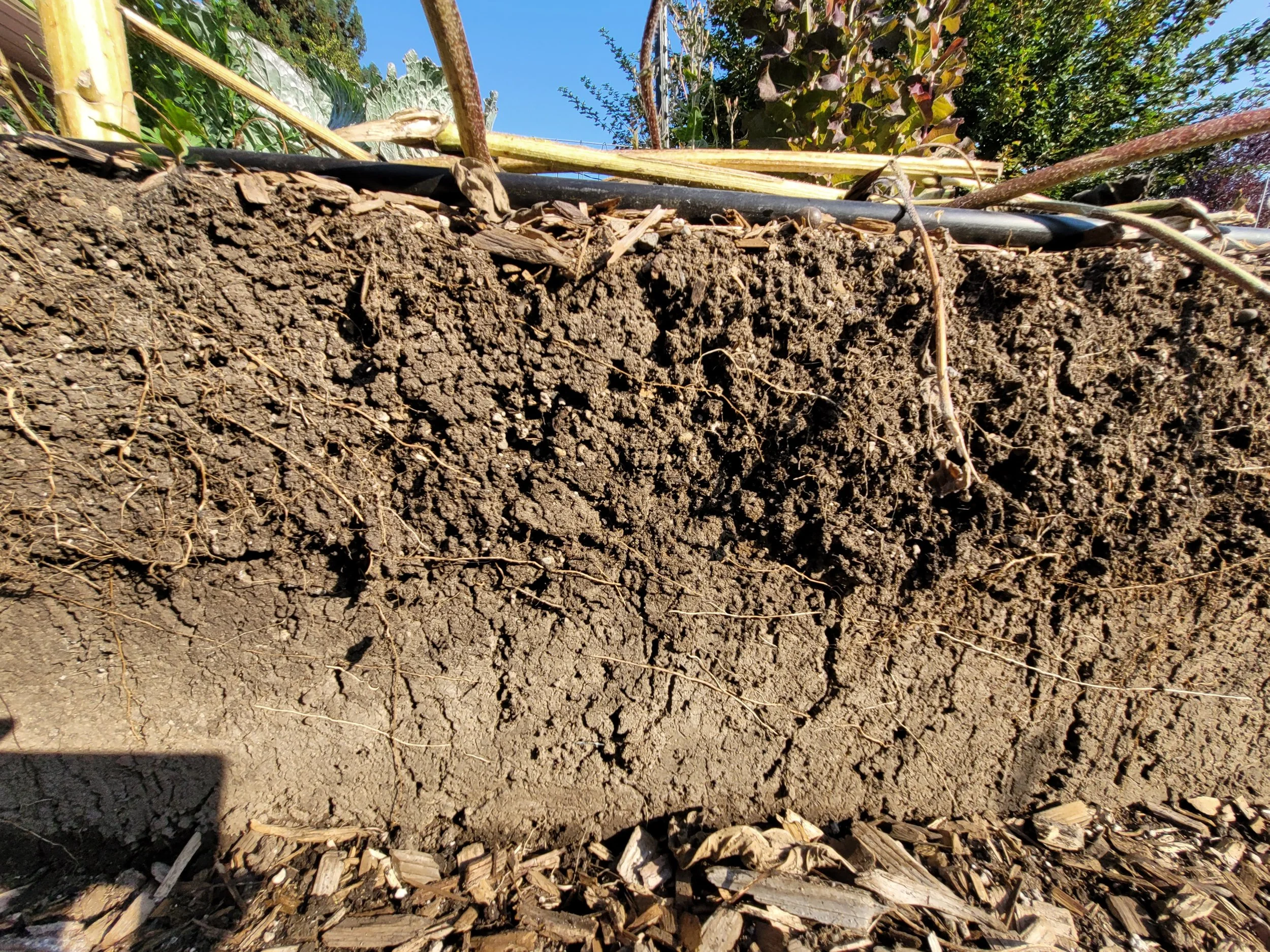
Close-up profile of soil in a garden bed with roots reaching down and mulch at the bottom, under a sunny blue sky.

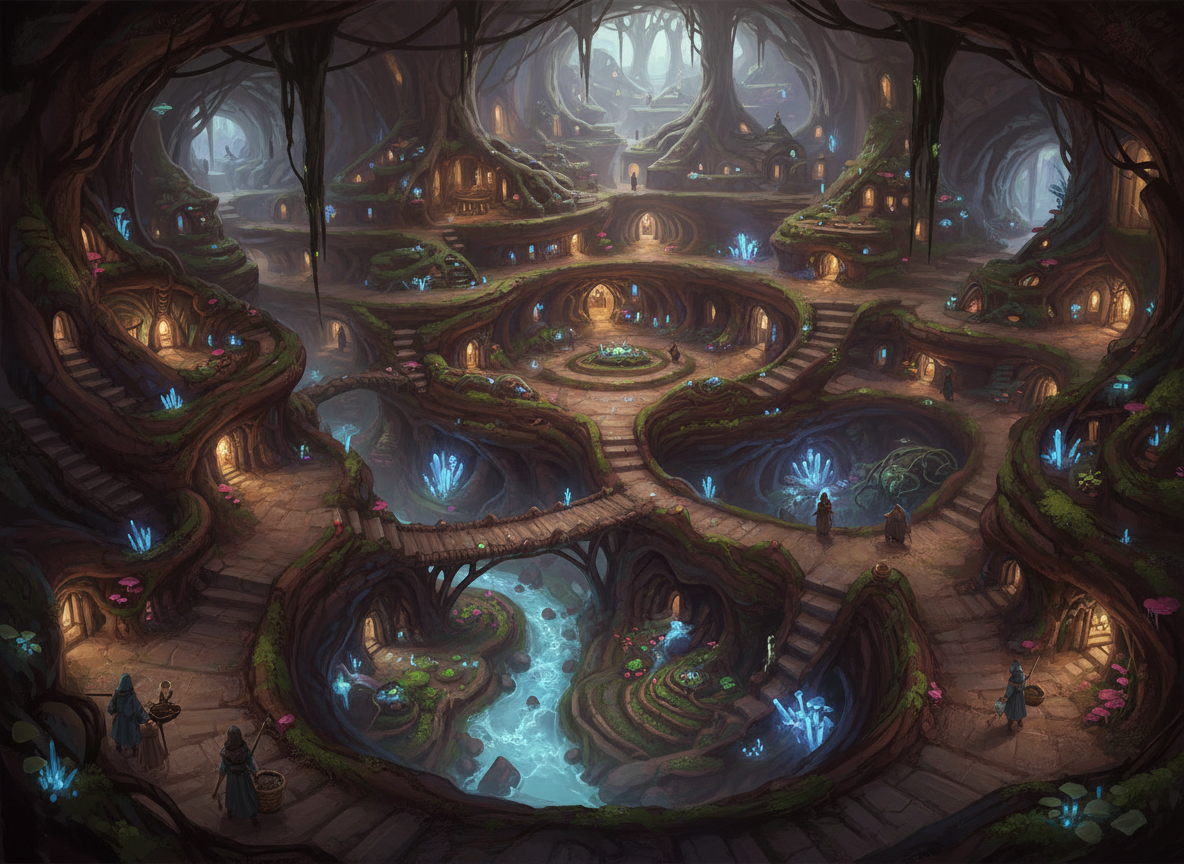
This is known as nutrient cycling. Think of this process like the microorganisms are building soil cities.

Fictional underground fantasy world with interconnected levels, glowing plants, houses with round doors, waterfalls, bridges, and people walking through the area.

And tillage as having the effect of Godzilla making its way through a major city.

Step 11
A giant monster resembling Godzilla digging with a pitchfork in a dark cave filled with glowing crystals and tall mushroom-like structures. The cave floor shows flowing lava and numerous smaller creatures and fungi.

By understanding and supporting the presence of a diverse soil food web, we support the health of regenerative soil which ensures nutrient cycling, feeds and protects our plants, increases production, flavor and nutrient density, which in turn feed our guts, fuel mental clarity, can ease inflammation, and ease the effects of compound stress and trauma.

To learn more about the connections between soil biology, personal wellness, community health, and global resilience, check out our workshops.

It's All Connected